
Electromagnetic Flowmeters: What They Are, How They Work and When to Use Them in Industrial Processes
· Leonel
Technical guide to electromagnetic flowmeters: operating principle, advantages over other technologies, selection variables and applications in mining, pulp and energy.
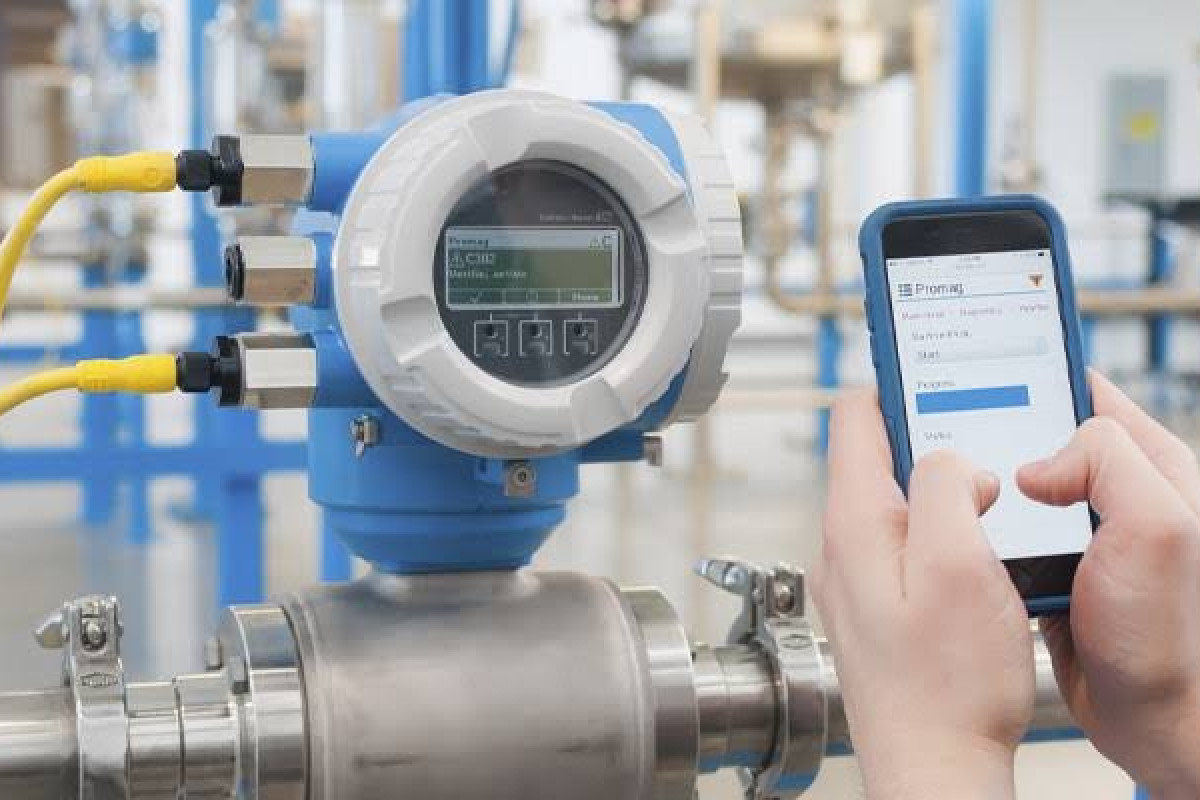
Electromagnetic Flowmeters: What They Are, How They Work and When to Use Them in Industrial Processes
Flow measurement is one of the most critical variables in any continuous industrial process. Choosing the wrong technology can mean inaccurate readings, frequent maintenance or equipment that simply cannot withstand process conditions. In this article we explain what an electromagnetic flowmeter is, how it works and when it is the best option.
What is an electromagnetic flowmeter
An electromagnetic flowmeter, also known as a magmeter, is an instrument that measures the volumetric flow of electrically conductive fluids using Faraday's law: when a conductor (the fluid) moves through a magnetic field, it generates a voltage proportional to its velocity.
The result is an instrument with no moving parts, a tube completely free of obstructions, and the ability to measure with high accuracy under demanding process conditions.
How it works
The electromagnetic flowmeter generates a magnetic field through two coils located on the outside of the measuring tube. As the conductive fluid passes through that field, a voltage proportional to the fluid velocity is induced and picked up by two electrodes in contact with the liquid. The transmitter converts that signal into a volumetric flow value (m³/h, l/min or other units depending on the configuration).
Fundamental requirement: the fluid must have a minimum conductivity, generally above 5 µS/cm. Process water, slurries, sludge, dilute acids and most industrial liquids meet this condition. Distilled water, hydrocarbons and gases do not.
Advantages over other technologies
| Characteristic | Electromagnetic | Turbine | Vortex | Ultrasonic |
|---|---|---|---|---|
| Moving parts | No | Yes | No | No |
| Pressure loss | None | Moderate | Moderate | None |
| Fluids with solids | Yes | No | Limited | Limited |
| Typical accuracy | ±0.2–0.5% | ±0.5–1% | ±1% | ±1–2% |
| Requires conductivity | Yes | No | No | No |
The absence of moving parts is the most relevant advantage in continuous industrial applications: no turbines to wear out, no bodies to get clogged by suspended solids.
When it is the right technology
The electromagnetic flowmeter is the first option to evaluate when:
- The fluid is conductive (process water, slurries, sludge, acidic or basic solutions)
- Suspended solids would damage equipment with moving parts
- High accuracy and long-term repeatability are required
- Pressure loss is a critical design factor
- The process runs continuously with minimal maintenance intervention
Typical applications in Chilean industry
Mining: slurry flow measurement in flotation circuits, and measurement of industrial water and tailings. Models with ceramic or polyurethane linings withstand the abrasive particles characteristic of these processes.
Pulp and paper: measurement of liquors, dilution water and effluents. The absence of moving parts reduces downtime in high-availability continuous processes.
Power generation: measurement of cooling water, condensate and demineralized water in thermal and hydroelectric power plants.
Key variables for correct selection
Before specifying an electromagnetic flowmeter, you need to define:
- Fluid conductivity: confirm that it exceeds the instrument's minimum threshold
- Process temperature and pressure: these determine the lining and electrode materials
- Presence of solids: defines the lining type (PTFE, rubber, ceramic, polyurethane)
- Compatible materials: electrodes can be stainless steel, Hastelloy, titanium or platinum depending on the fluid
- Nominal diameter: must match the existing pipe or the process design
- Output signal type: 4-20 mA, HART, Profibus, Foundation Fieldbus or others
- Area classification: if the environment is potentially explosive, the equipment must be certified (ATEX, IECEx, cUL)
Installation: considerations that make the difference
A well-selected flowmeter can give incorrect readings if the installation is not adequate. The most critical points:
- Straight runs: a minimum of 5DN upstream and 2DN downstream of any elbow, valve or reducer is required for the velocity profile to stabilize
- Full pipe: the pipe must be completely full during measurement; installing on vertical sections with upward flow guarantees this
- Grounding: the instrument requires proper grounding to avoid electromagnetic interference affecting the signal
In summary
The electromagnetic flowmeter is one of the most robust and accurate flow measurement technologies available for processes with conductive fluids. Its main advantage in demanding industrial environments is the combination of high accuracy, no moving parts and the ability to work with slurries and fluids with suspended solids.
The key to getting the most out of its performance lies in selecting it correctly for the actual process conditions and in an installation that respects flow profile and grounding requirements.
At G-MAR we advise on the selection, configuration and installation of electromagnetic flowmeters for industrial processes in mining, pulp, energy and other industries. If you need to specify an instrument for your process, contact us.
You may also be interested in: flow meters, industrial temperature sensors, industrial instrumentation services, brands we represent and instrumentation by industry.