Instrumentation for Mining: Critical Variables and Equipment Selection Criteria
· Leonel
What to measure, how to measure it and what to consider when specifying instrumentation in mining processes: slurry flow, thickener level, pressure in flotation circuits and analytical measurement.
Instrumentation for Mining: Critical Variables and Equipment Selection Criteria
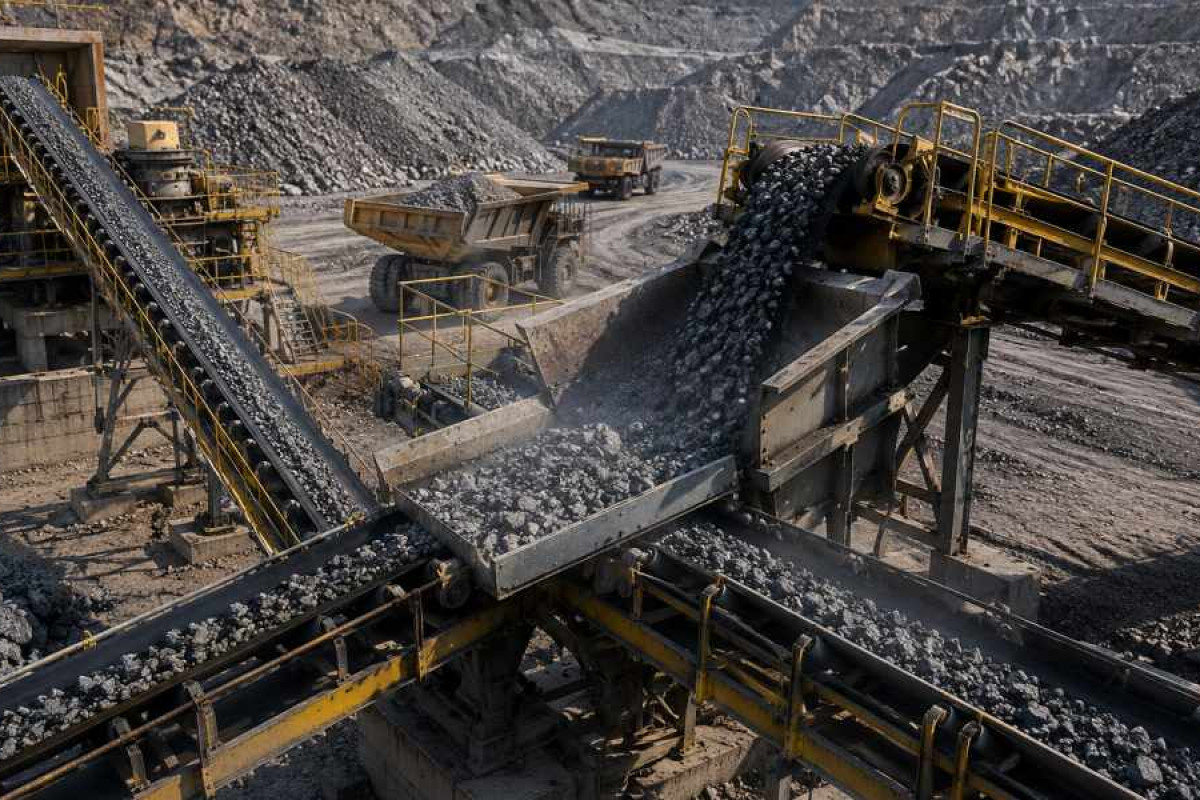
Mining processes impose operating conditions that few industrial environments match: abrasive fluids with high solids loads, extreme temperatures, remote areas with limited access and continuous availability requirements. Correctly choosing and specifying instrumentation in this context is not a detail — it is a decision that directly affects operational continuity and process efficiency.
This article reviews the most relevant process variables in mining operations and the technical criteria for selecting the right measurement equipment.
Critical variables in a mining process
A typical mineral concentration process involves multiple stages with well-defined process variables. The most relevant from an instrumentation standpoint are:
1. Slurry flow
Flow measurement in grinding, flotation and tailings circuits is fundamental to the process mass balance. Mining slurries — a mixture of ground ore and water — have enough conductivity for electromagnetic technology and a high solids load that rules out practically any technology with moving parts.
Recommended technology: electromagnetic flowmeter with natural rubber or polyurethane lining for abrasion resistance, and Hastelloy or titanium electrodes depending on the chemical aggressiveness of the fluid.
Key considerations:
- Flow velocity between 1 and 3 m/s to minimize lining wear
- Installation on a vertical section with upward flow to guarantee a full pipe
- Verify that the slurry conductivity exceeds the instrument's minimum threshold
2. Level in tanks and thickeners
Level control in process tanks, thickeners and leach piles is critical for operational stability. Conditions vary enormously: from relatively clean water to dense slurries with high solids loads and a tendency to form crusts.
Technologies by application:
| Application | Recommended technology | Why |
|---|---|---|
| Slurry tanks | Guided wave radar (GWR) | Not affected by foam or vapors |
| Thickeners | Pulse radar or ultrasonic | Non-invasive measurement from the top |
| Leach piles | Hydrostatic pressure | Robustness and simplicity in open field |
| Tanks with crusting | Guided wave radar or pressure | Immune to deposit buildup |
Critical point: in thickeners with a sludge bed, interface level measurement (sludge/liquid) requires specific technology — usually differential pressure sensors or gamma-ray density sensors.
3. Pressure in flotation circuits
Process pressure in pipes, pumps and cyclones is a monitoring and protection variable. In flotation, differential pressure across cyclone batteries makes it possible to infer classification efficiency and detect clogged or excessively worn cyclones.
Technology: pressure and differential pressure transmitters with a ceramic sensor or PTFE diaphragm for fluids with solids or chemically aggressive fluids.
Installation: 3- or 5-valve manifolds for differential transmitters should be positioned so that the high-pressure side is at the bottom when the fluid contains solids, to avoid buildup that would affect the measurement.
4. Analytical measurement: pH and slurry density
pH: pH control in flotation cells is decisive for process selectivity. Electrodes with a robust membrane and low online calibration requirements are needed. Automatic sensor cleaning (air jet or ultrasonic) is practically mandatory in slurries.
Slurry density: Measuring density or percent solids in slurry is fundamental for grinding circuit control. The main options are:
- Nuclear (gamma ray): non-invasive measurement, no contact with the fluid, high robustness. Requires a radioactive source license and safety protocols.
- Vibrating density meter: inline measurement with high accuracy, requires contact with the fluid and material compatibility.
- Differential pressure on a column: indirect, simple, low-cost method for applications where accuracy is not critical.
5. Temperature in hydrometallurgical processes
In leaching plants, electrowinning (EW) and solvent extraction (SX), the electrolyte temperature is both a process and a quality variable. RTDs (PT100) are used with thermowells in stainless steel or titanium depending on the aggressiveness of the electrolyte.
Mining-specific selection criteria
Beyond the variable to be measured, mining processes impose conditions that must be considered when specifying any instrument:
Abrasion resistance: The constant presence of mineral particles in the fluid rapidly wears any surface in contact. Lining materials (rubber, ceramic, polyurethane) and electrode coatings must be selected according to the process mineralogy.
Chemical compatibility: The reagents used in flotation (xanthates, frothers, activators, depressants) and in hydrometallurgy (sulfuric acid, cyanide, organic solvents) can attack certain materials. The manufacturer's chemical compatibility chart is a mandatory reference document.
Area classification: Zones with flammable gases (such as some electrowinning plants) require instrumentation with ATEX or IECEx certification.
Accessibility and maintenance: At remote sites with reduced technical staff, priority goes to equipment with minimal calibration requirements, self-diagnostics and remote communication (HART, WirelessHART) that allow the instrument's status to be verified from the control room.
Mechanical protection: Field-installed equipment must meet at least IP67 and, preferably, IP68 in areas exposed to pressure washing.
The real cost of poor specification
In mining, poor instrumentation specification has concrete, quantifiable consequences:
- A flowmeter without an adequate lining can fail within weeks due to abrasive wear
- A level sensor not suited to slurries can give erroneous signals that affect thickener control, leading to overflow or underfilling
- A pressure transmitter without a suitable diaphragm can clog with solids and require frequent intervention
The difference between a standard instrument and one correctly specified for mining can be 3 to 10 times in service life — and 1 to 100 in the cost of unplanned failure.
In summary
The right instrumentation for mining is not the most expensive or the most technologically advanced — it is the one that is correctly specified for the real process conditions: fluid abrasiveness, chemical aggressiveness, field accessibility and availability requirements.
At G-MAR we work directly in the field with process and maintenance engineers to select, specify and commission instrumentation at mining operations across Chile. Our clients include operations of Codelco, Anglo American, Candelaria, Pucobre and Glencore Alto Norte.
If you have a mining instrumentation project, let's talk.
You may also be interested in: level measurement, industrial temperature sensors, industrial instrumentation services, brands we represent and instrumentation by industry.